0 Comentários
·0 Compartilhamentos
·115 Visualizações
·0 Anterior



-
0 Comentários ·0 Compartilhamentos ·102 Visualizações ·0 Anterior
-
China's Yuan Rises as a Global Currency Force
Trade settlement in Chinese yuan rose from 13 percent of China-linked transactions in 2019 to 30 percent last year, according to a Goldman Sachs research note. Total cross-border yuan transactions also increased sharply, from 9 trillion yuan in 2017 to 64 trillion yuan in 2024.
Beijing is pushing for greater international use of the yuan to reduce reliance on US dollar channels, particularly amid strained relations with Washington and concerns over the dollar being used as a geopolitical tool.
Goldman Sachs economist Chen Xinquan noted that broader yuan adoption would require more stable;
offshore liquidity,
better risk management tools,
and a wider pool of yuan-denominated assets
He added that cross-border yuan use is becoming more investment-driven, meaning foreign participants need easier funding, hedging, and more attractive assets.
The bank also pointed to Hong Kong’s potential role in the next phase, as China is expected to prioritise gradual onshore opening and deeper offshore markets over full capital-account liberalisation.
@NewRulesGeoFollow us on X🚨🇨🇳China's Yuan Rises as a Global Currency Force Trade settlement in Chinese yuan rose from 13 percent of China-linked transactions in 2019 to 30 percent last year, according to a Goldman Sachs research note. Total cross-border yuan transactions also increased sharply, from 9 trillion yuan in 2017 to 64 trillion yuan in 2024. Beijing is pushing for greater international use of the yuan to reduce reliance on US dollar channels, particularly amid strained relations with Washington and concerns over the dollar being used as a geopolitical tool. Goldman Sachs economist Chen Xinquan noted that broader yuan adoption would require more stable; offshore liquidity, better risk management tools, and a wider pool of yuan-denominated assets He added that cross-border yuan use is becoming more investment-driven, meaning foreign participants need easier funding, hedging, and more attractive assets. The bank also pointed to Hong Kong’s potential role in the next phase, as China is expected to prioritise gradual onshore opening and deeper offshore markets over full capital-account liberalisation. @NewRulesGeo❗Follow us on X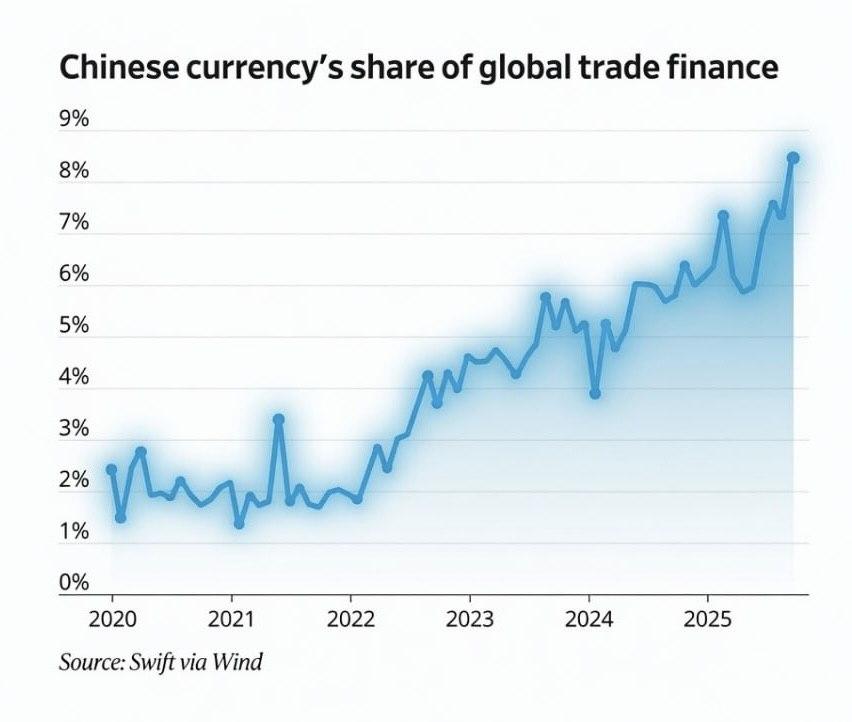 0 Comentários ·0 Compartilhamentos ·263 Visualizações ·0 Anterior
 -
0 Comentários ·0 Compartilhamentos ·114 Visualizações ·0 Anterior
-
0 Comentários ·0 Compartilhamentos ·115 Visualizações ·0 Anterior
-
0 Comentários ·0 Compartilhamentos ·101 Visualizações ·0 Anterior
-
0 Comentários ·0 Compartilhamentos ·115 Visualizações ·0 Anterior
-
0 Comentários ·0 Compartilhamentos ·115 Visualizações ·0 Anterior
-
0 Comentários ·0 Compartilhamentos ·151 Visualizações ·0 Anterior
-
0 Comentários ·0 Compartilhamentos ·154 Visualizações ·0 Anterior